
This guide explains how to rent an apartment or villa in Dubai safely and efficiently: where to search (portals, aggregators, community chats), how to verify an agent and a listing, what to focus on in the tenancy contract, and what to do after signing (Ejari, DEWA, and sometimes district cooling). It is written for non-professionals and uses checklists you can follow without prior experience. Plan 1–2 evenings for initial search and filtering, 1–3 days for viewings, and a few hours to a couple of days for paperwork (depending on documents and turnaround).
Assumption: this is long-term renting (often 12 months) with an agreed payment schedule (sometimes split into multiple payments/cheques).
When to call a handyman or specialist (4–6 bullets)
Bring in a handyman or a qualified specialist if:
- You notice water stains, damp spots, mould, or a persistent musty smell.
- There are electrical warning signs (flickering lights, tripping breakers, hot sockets). High risk: use a licensed electrician.
- There are plumbing/drainage issues (weak pressure, unstable hot water, smells from drains).
- You are unsure about AC/cooling performance (noise, leaks, weak cooling, odours).
- Work involves height (curtain rails, ceiling fixtures, tall windows/balconies): safety equipment matters.
- You are renting furnished and want a documented condition/inventory record to protect your deposit.
Tools and materials
| What you need | Example | Why it helps |
|---|---|---|
| Phone + camera | Any smartphone | Evidence, photos, videos |
| Notes or spreadsheet | Notes / Google Sheets | Compare options and costs |
| Torch | Phone torch | Check corners and under sinks |
| Tape measure | 3–5 m | Ensure furniture/appliances fit |
| Charger/adaptor | Local plug type | Quick, non-invasive socket check |
| Document folder | PDFs/scans | Share documents quickly |
| Viewing questions sheet | One page | Don’t forget key questions |
Prep and safety checklist (8–12 items)
Before booking viewings or paying anything:
- Build an all-in budget: rent + landlord deposit + agent fee + registration + utility deposits + internet/moving.
- Shortlist 3–5 areas and test commute times during peak hours.
- Decide upfront: furnished vs unfurnished, balcony, parking, pet policy, building age.
- Set your maximum acceptable payment schedule (e.g., fewer instalments vs more).
- Avoid “hold it now” requests with unclear paperwork.
- Ask for the agent’s broker credentials and verify they are legitimate.
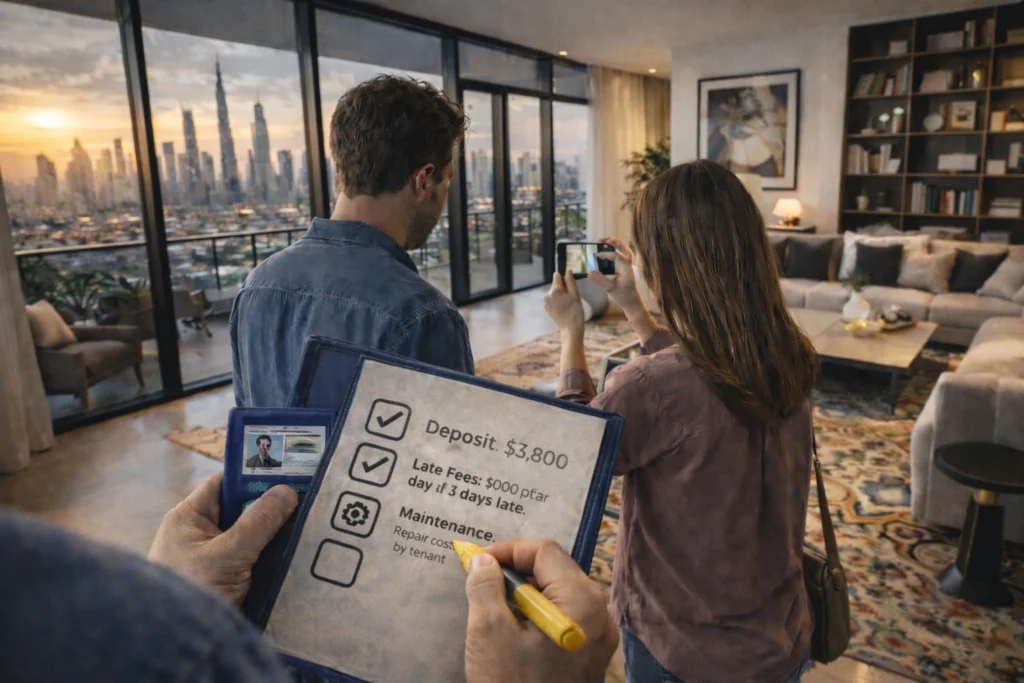
- Record a full walk-through video at every viewing.
- Confirm maintenance responsibility and response times in writing.
- Clarify whether cooling is separate (district cooling) or handled differently.
- Keep a Plan B option so you never sign under pressure.
Step-by-step instructions
Step 1. Define requirements and non-negotiables
Goal: filter listings fast.
Actions:
- Write 5 must-haves and 5 nice-to-haves.
- Set your maximum budget and acceptable payment schedule.
- Villas/townhouses: add garden/drainage, road noise, parking, community rules.
Done right when: you can reject a listing in 30 seconds.
Common mistakes: ignoring total move-in costs; choosing areas based on photos only.
Step 2. Choose search channels: portals plus community leads
Goal: cover the market without drowning in low-quality ads.
Actions:
- Start with major portals/aggregators (e.g., Bayut, Property Finder, dubizzle) and use saved searches and map filters.
- Use community groups/chats for leads (area groups, building communities, relocation groups).
- Treat chats as lead sources: viewing and verification first, money last.
Done right when: you have 2–3 primary sources and one consolidated shortlist.
Common mistakes: trying to finalise payments in private chats.
Step 3. Verify the agent and the listing before viewing
Goal: reduce scam risk.
Actions:
- Request the agent’s registered credentials and company details.
- Verify they are authorised to broker rentals.
- Be cautious with “too good to be true” pricing and urgency tactics.
- Confirm what’s included (parking/cooling), pet rules, term and payment schedule.
Done right when: the agent is verifiable and terms are clear.
Common mistakes: paying a “reservation” before verification.
Step 4. Prepare documents and the true “move-in threshold”
Goal: move quickly once you find the right unit.
Actions:
- Prepare scans: passport, visa/Emirates ID (if available), phone/email.
- Confirm payment dates and the recipient name.
- Estimate upfront costs: landlord deposit, agent fee, registration (Ejari), utility setup (DEWA), potential cooling registration/deposit.
Done right when: you know what you pay today, on move-in day, and monthly.
Common mistakes: budgeting only “rent” and forgetting deposits/setup.
Step 5. Run a structured viewing (apartment vs villa)
Goal: spot expensive issues early.
Actions:
- Record a full walk-through video.
- Check doors/windows, damp signs, under-sink areas, and cupboards.
- Run taps/shower briefly: pressure, temperature, drainage.
- Test AC/cooling: noise, smell, cooling speed.
- Ask management about move-in rules and permits.
Apartments: parking allocation, guest parking, lift noise, amenities access.
Villas: outdoor drainage, pests, hot water behaviour (no disassembly).
Done right when: you have evidence and a defect list.
Common mistakes: focusing on staging and skipping water/AC tests.
Step 6. Agree terms in writing before signing
Goal: prevent “surprises”.
Actions:
- Confirm rent, term, start date, payment schedule, inclusions.
- Clarify who pays for setup and who handles maintenance.
- Furnished: prepare an inventory and condition notes (scratches, missing items, faults).
- If repairs are promised, set deadlines and record them in writing.
Done right when: verbal promises exist as written terms.
Common mistakes: relying on “we’ll fix it later”.
Step 7. Review the contract for risk points
Goal: avoid costly clauses.
Actions:
- Verify parties, address, term, and payment schedule.
- Read maintenance/repair responsibility carefully.
- Agree on move-in/move-out inspection process and deposit return timing.
- Clarify early termination, penalties, and rules on alterations.
Done right when: you can explain your obligations and exit conditions.
Common mistakes: signing without a furnished inventory/condition attachment.
Step 8. Register the tenancy (Ejari)
Goal: formalise the tenancy and support services.
Actions:
- Register the signed tenancy via the standard Ejari process (online/app or authorised centres).
- Save confirmation and key tenancy details.
Done right when: you have Ejari confirmation/certificate.
Common mistakes: delaying registration and then getting stuck with admin steps.
Step 9. Set up DEWA and understand deposits/fees
Goal: have electricity and water active by move-in day.
Actions:
- Prepare for DEWA account activation after tenancy registration.
- Budget for a refundable deposit and activation fees (amounts can differ for apartments vs villas).
- Clarify cooling separately: some buildings have district cooling with its own registration/deposit.
- Book internet installation with a realistic lead time.
Done right when: power/water are active and billing is understood.
Common mistakes: confusing DEWA with cooling; forgetting setup costs.
Step 10. Move in: condition record and a sensible “fix list”
Goal: protect your deposit and settle in smoothly.
Actions:
- Photo/video everything on day one (walls, floors, bathrooms, balcony, furniture/appliances).
- Email the defect list within 24–72 hours.
- Create a safe fix list: furniture assembly, small hardware adjustments, sealing where needed, curtain rail installation (with permission for drilling).
Done right when: defects are documented and acknowledged.
Common mistakes: no move-in evidence; drilling/alterations without consent.
FAQ (6–10)
- Where should I start searching in Dubai?
Major portals first, then area/building communities for extra leads. - Are community chats safe?
They are useful for leads, but payments should happen only after viewing, verification, and clear paperwork. - How do deposits typically work?
Landlord deposit is commonly a percentage of annual rent (often higher for furnished). Always document condition at move-in. - What contract sections matter most?
Maintenance, early termination, deposit deductions, and inventory/condition attachments. - Does DEWA include cooling?
DEWA is electricity and water. Cooling may be separate depending on the building. - What costs do people forget?
Deposits, activation/setup fees, cooling registration, internet installation, and post-move minor work. - How do I protect my deposit?
Move-in photos/videos + written defect list early + clean handover process. - What can a handyman help with after move-in?
Assembly, fittings (with permission), minor sealing and hardware fixes; electrical and complex plumbing should go to licensed specialists.
Renting in Dubai becomes straightforward when you follow a controlled sequence: search in the right channels, verify the agent, inspect the unit, lock terms in writing, then register and set up utilities calmly. Avoid informal prepayments and document the property condition from day one. For post-move practical work—assembly, fittings, small fixes—“DUBAI VISTA” can handle it safely and neatly.